5 Learning Habits
Shared by the Most Curious
Minds in History
Learning is changing your behavior, and that behavior changes the world around you.
Starting from that premise, the people who change the world the most are entrepreneurs.
I love entrepreneurs because they create new realities from their minds. They fight pessimism, poverty, and the marginalization that leads to mediocrity.
With their actions, they prove every day that the universe is a non-zero sum game.
They understood that the output of every company is the vector sum of the people who work there, paraphrasing Musk, and they spend their lives searching for the best talent and the best direction.
I always remember a line from Carlos Slim that captures entrepreneurs perfectly: entrepreneurs are temporary creators and administrators of wealth, generating development and employment, and they leave with nothing.
I think they leave one thing to us. One very important thing:
Knowledge.
Knowledge that can transform the universe.
But how does an entrepreneur who can change so much behavior, learn?
How did some of the most curious minds in history learn?
Leonardo da Vinci. Elon Musk. Steve Jobs. Marc Andreessen. Charlie Munger. Some examples of these curious creators of realities.
These 5 curious people share 5 things in how they learn. They are well documented and well known, but it's important to remember these patterns because they are timeless for future generations to learn.
01Self-taught (most of the time)
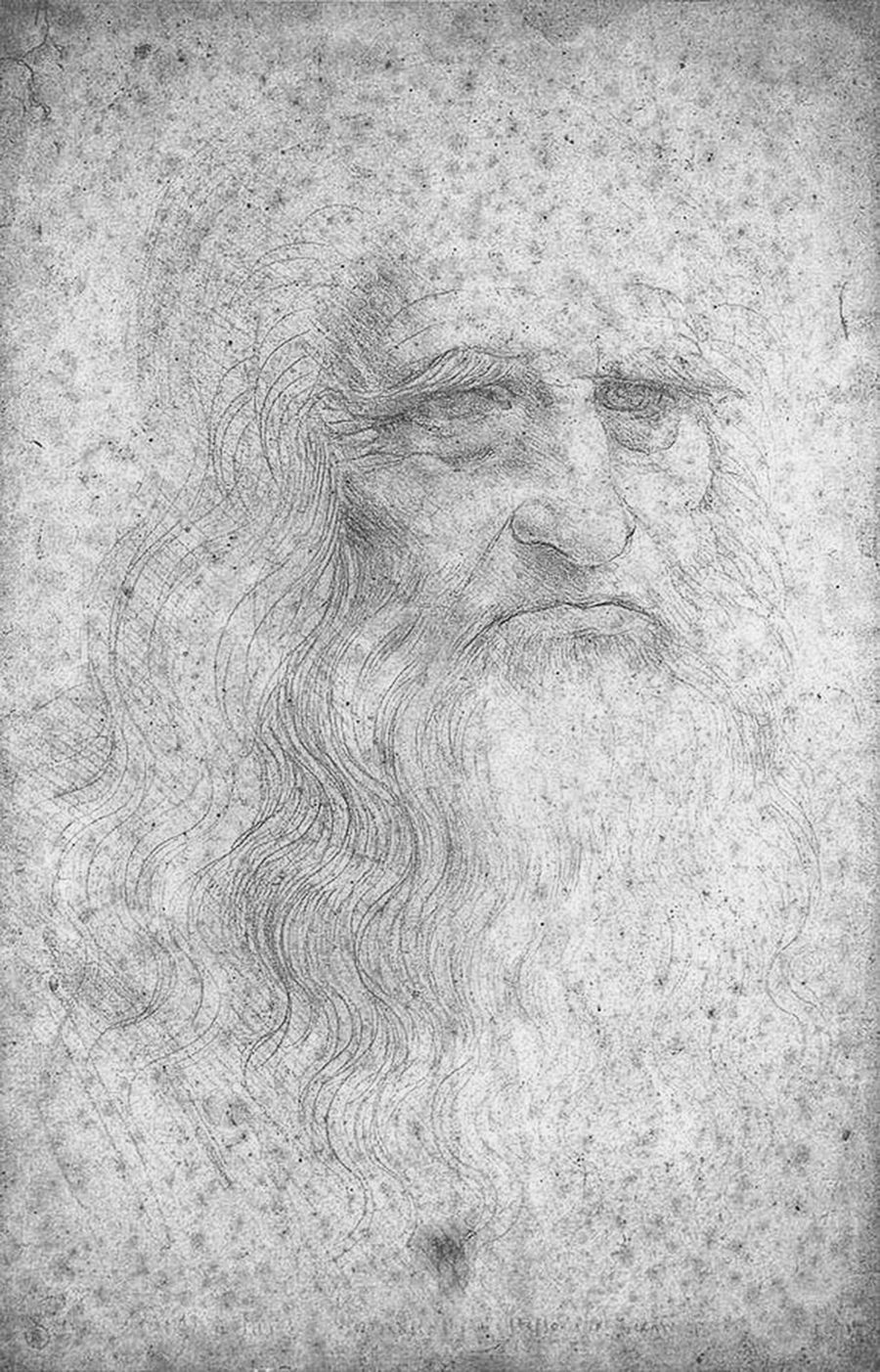
Da Vinci had zero formal education but great mentors and is probably the most curious human ever documented, someone we will study for a long time.
Musk taught himself rocket science and coding from books before building SpaceX, and he loves science fiction (he also studied physics and economics at the University of Pennsylvania). His family office is named Excession, after a novel from the Culture book series by Iain M. Banks.
Jobs dropped out of Reed College, but learned from everything that was put in front of him, and turned it into something wonderful. I think he is one of the greatest learning-by-doing people.
Andreessen arrived in Silicon Valley in 1994 and devoured every book on startups he could find before building Netscape, after studying computer science at the University of Illinois.
Munger graduated from Harvard Law but said the real education came from decades of reading across every discipline imaginable. And he made the famous quote:
Spend each day trying to be a little wiser than you were when you woke up. <3
Not one of them waited for a classroom to give them permission to follow the passion that the universe gave them.
In some sense they knew that people are universal explainers, as David Deutsch puts it, with the capacity to understand literally anything that can be explained. Humanity has proven this over and over: from discovering fire, to reaching the moon, to every year learning how to better harness energy from our lovely sun. If the species can do all that, any individual can learn all the math and physics they want, even if they don't do well in school.
I love that in this time with AI, it is even easier to be self-taught and build an AI expert trained in the masters' pedagogies, solving Bloom's 2-sigma problem at scale.
One of the largest problems in education right now is motivation. We have all the information for free on the web. The challenge now is creating societies with incentives for people to learn forever, even in post-scarcity societies, where we will have the moral duty to learn in order to solve the problems that arise.
And motivation is exactly where education is being rebuilt right now. A good way to find it is with great teachers. Alpha School is doing something great for our young kids' education, with AI guiding and humans providing the motivation part. The Horowitz Andreessen Academy seems like a good place after Alpha School, when you're a young, motivated person, being surrounded by people who already did what you want to do is a great way to feel motivated.
The focus now is on creating competent builders in a globalized world where it can be hard to think independently even with mimetic desires attacking from every direction.
02Read obsessively. Reading as the only healthy vice.
Musk finished the Encyclopedia Britannica at age 9 and read 10+ hours a day as a kid. He once said:
If you do something like read a lot of books and talk to a lot of people, you can learn almost anything.
I really believe the best books for children are illustrated encyclopedias and fables. The former create curiosity and span different areas, and the latter create principles and values to inspire them. I hope to give good ones to my kids someday. My favorite as a kid was Mi primer libro de los porqué, the Larousse one, and all the encyclopedias I could find in my father's library; I remember spending hours with them.

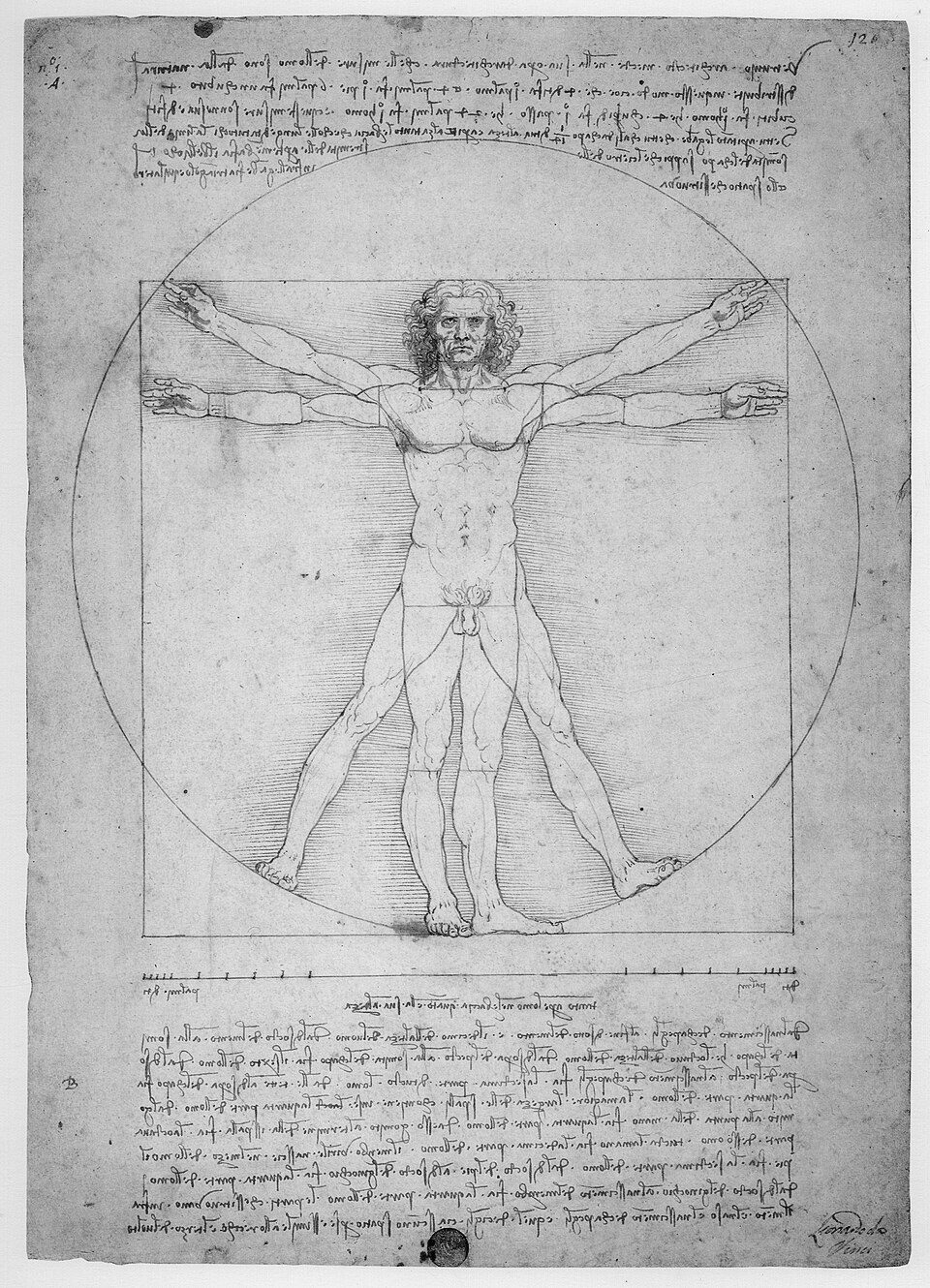
Da Vinci left behind over 7,000 surviving pages of handwritten notebooks filled with questions, sketches, and experiments. He devoured everything he could get his hands on: Vitruvius's treatise on architecture (which directly inspired his famous Vitruvian Man), Euclid's geometry, and texts on military engineering, anatomy, and hydraulics. He had almost no formal schooling, so he taught himself Latin later in life just to access more books. Kenneth Clark called him "the most relentlessly curious man in history," and his notebooks prove it: to-do lists that included things like "describe the tongue of the woodpecker" and 169 attempts to square a circle.
Jobs read Shakespeare, Plato, and Dylan Thomas in high school, then spent the rest of his life reading about things that made him curious, like specific diets and spirituality, such as Be Here Now by Ram Dass. Another great book he supposedly read and reread every year was Autobiography of a Yogi by Yogananda, the only book he downloaded on his personal iPad, and he arranged to gift a copy to every person who attended his own memorial service. (One of my favorite performers, Elvis Presley, reportedly loved this book too, and so did George Harrison. For me, it's a book about how the mind can create realities. Cool book. I haven't finished it, but the chapter about the guru creating palaces with his mind is great.) And Ram Dass too. My "I love you" tattoo in the middle of my chest was influenced by Ram Dass's teachings. Be Here Now is what moved Jobs to make his trip to India in 1974, and I believe it's a book he always kept with him.
Andreessen has recommended a lot of books across psychology, history, economics, and fiction. One I find interesting is When Reason Goes on Holiday, about how even highly curious people can make what the author calls irrational decisions. High Output Management is a good one too, and Zero to One from Thiel, another classic. The original class notes from CS183 on the Tumblr page of Blake Masters are really good, especially the chapter about founders as gods, founders as scapegoats. Marc is a great reader, a great mixer of ideas, a very interesting mind, I hope one day I meet him, only to listen and learn from him.
Andreessen says his diet of content currently is: "My information consumption is now 1/4 X, 1/4 podcast interviews of the smartest practitioners, 1/4 talking to the leading AI models, and 1/4 reading old books. The opportunity cost of anything else is far too high, and rising daily."
By the way, I think X is the place for anybody who wants to learn AI. All the cool AI people are there, the creators of the current things are there. And for a book from the last century to make you think, I will go with Universal Economics by Alchian. The part with the Q&A in the book of Alchian is particularly interesting, it nudges you to think with every word.
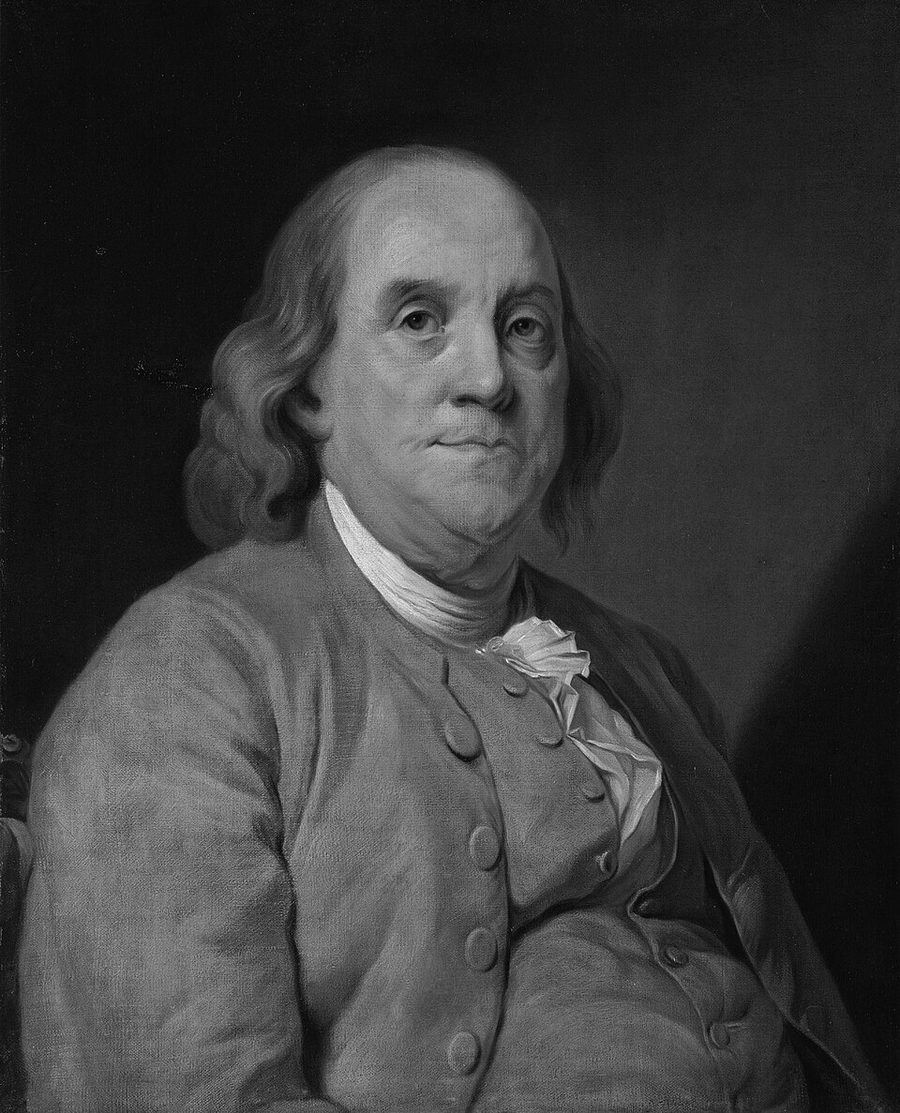
Munger read for hours every day, for decades. He said it himself: "My children laugh at me. They think I'm a book with a couple of legs sticking out." A lover of reading and curiosity, like one of his favorite curious people, Benjamin Franklin. <3
Some other curious stories of curious people who read a lot: James Joyce, whose Finnegans Wake is a gem of independent thinking. And Jorge Luis Borges, great writer and reader, who said:
Let others boast of the pages they have written; I take pride in the ones I have read.
Apart from having created the Library of Babel, and by the way:
If one day I could dream big, I would create an anti-library (in the Umberto Eco sense): a hexagonal bunker in the style of the Library of Babel with a main rooftop full of warm sunlight. The books would be carefully selected with the great help of my father, Patrick Collison, Ricardo Salinas, and someone who has ideas totally different from mine.
On that rooftop I would recite a phrase, a phrase summarizing the beauty of a type of book, taken from a poem by the Spanish poet Francisco de Quevedo, that I necessarily need to put in Spanish because the translation doesn't do it justice:
Retirado en la paz de estos desiertos,
con pocos, pero doctos libros juntos,
vivo en conversación con los difuntos
y escucho con mis ojos a los muertos.
03Cross disciplines like it's breathing.
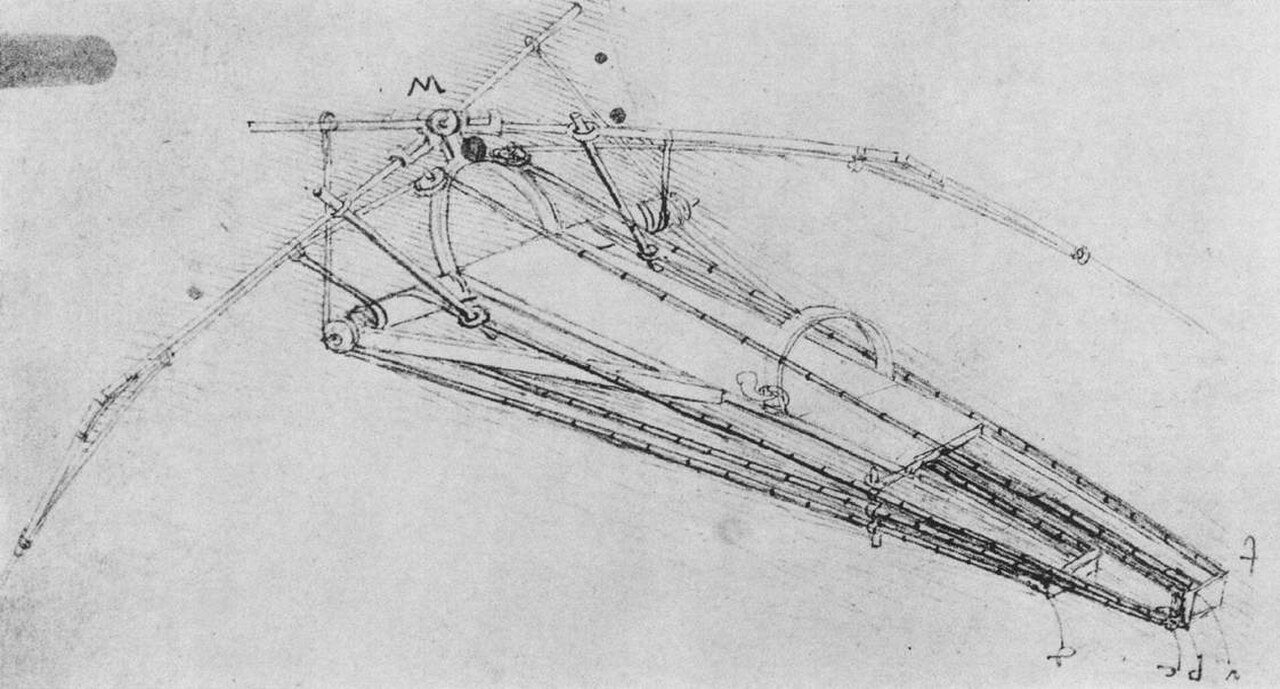
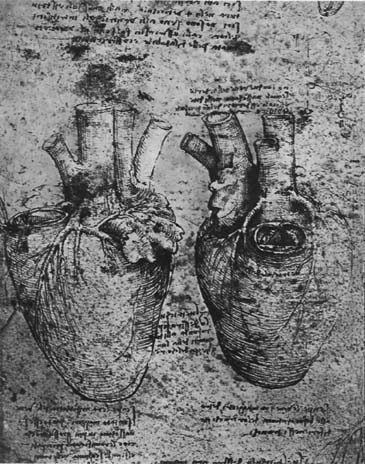
Da Vinci combined art, anatomy, engineering, and hydraulics in a single notebook page. One day he'd sketch a heart valve, the next he'd design a flying machine.
Jobs said Apple existed at "the intersection of technology and the liberal arts." A calligraphy class he took at Reed became the typography of the Macintosh ten years later.
Musk moves between physics, AI, manufacturing, and space in a single week (and in his companies has an admirable context switch between them and meetings day to day).
Andreessen reads history and psychology to make better venture capital bets.
Munger built what he called "a latticework of mental models" pulling from psychology, math, economics, physics, biology, engineering, and history. He said: "I just grabbed in all directions for the big ideas that would really work. Nobody taught me to do that." I think besides the great Poor Charlie's Almanack, another way to start is Shane Parrish's website, Farnam Street, great ideas there.
Always remember what David Deutsch taught us:
Nothing is a resource until we have the knowledge to make it one. We do not “run out” of resources; we run out of ideas.
We have the power to create an even more sustainable, non-zero-sum society.
I think a great example of cross-disciplinary thinking is Von Neumann, a truly remarkable demonstration of what a human with high brain capacity and deep curiosity can create.
04Think in first principles.
Knowledge that causes transformation is only limited by the currently known laws of physics. This leads to deep curiosity: what is the universe about?
Musk:
View knowledge as a semantic tree. Make sure you understand the trunk and big branches before the leaves.
At Adapta.org, Max likes to say: trunks before branches.
Da Vinci did the same thing 500 years earlier. He didn't trust inherited wisdom. He observed, experimented, dissected, and drew his own conclusions. Walter Isaacson wrote that his "willingness to challenge received wisdom foreshadowed the scientific method developed more than a century later."
Jobs got there through meditation: always approach situations with a beginner's mind.
Munger called it inversion: "Turn a situation or problem upside down. Look at it backward."
05Learn by doing.
Especially in technology it is easy to learn by doing. The current market is a good place to validate all the ideas you have through your learning. People have the right to decide whether to buy or not something you create. You can test your value creation, and that's beautiful.
Musk didn't study rockets only for fun. He built SpaceX.
Da Vinci didn't study anatomy out of curiosity alone. He dissected 30+ human bodies to paint more accurately.
Jobs took a calligraphy class out of pure curiosity and turned it into the Macintosh interface ten years later.
Andreessen didn't just read about startups. He co-created the first widely used web browser, then built the firm that funds the next generation of them.
Munger didn't collect mental models as decoration. He used them to turn Berkshire Hathaway into one of the most valuable companies on earth.
All of these are simple ideas, taken seriously: relentless curiosity, obsessive reading, thinking across disciplines, first principles thinking, and learning by doing.
I think a phrase to summarize all of this, and to appreciate every second of this beautiful life and dedicate it to learning and creating, is from Marcelino Menéndez y Pelayo, who came to have a library of 40,000 volumes. History tells us that six days before dying, Marcelino, lying in his bed, contemplated melancholically the full shelves of his library and exclaimed:
What a shame to have to die when there is still so much left to read!
What a shame to have to die when there is still so much value to create...
Axel